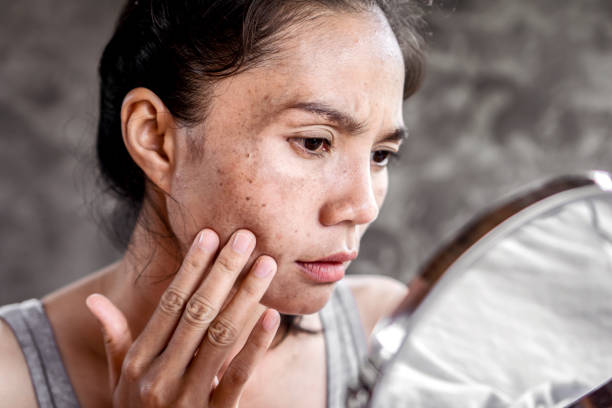
Those stubborn brown marks that linger after a York Region summer are not “just freckles getting darker.” They are clustered melanin — and medical IPL photofacials are designed to find that pigment, heat it selectively, and let the skin clear it over a predictable week of coffee-ground micro-flaking.
I am Susan Khalil. At The Derma Lounge in Aurora, we use intense pulsed light when the clinical goal is sun-spot clearance, mottled pigmentation, or facial redness from spider veins and rosacea. The science is specific. The recovery is visible. Starting in September is how we turn late-summer damage into clearer winter skin — without asking you to hide from July UV while the skin is still shedding pigment.
Selective photothermolysis: why IPL can hit spots and skip surrounding skin
Selective photothermolysis is the principle that a pulse of light can injure a chosen target (a chromophore) if three conditions line up: the wavelength is absorbed more by that target than by nearby tissue, the pulse is short enough that heat does not dump into the dermis around it, and the fluence is high enough to damage the target without indiscriminate burning.
For an IPL photofacial, the two primary chromophores we care about are:
- Melanin in epidermal sun spots, age spots, and freckle-like solar lentigines
- Oxyhemoglobin in dilated facial capillaries, telangiectasia, and rosacea-related redness
Unlike a single-wavelength laser, IPL is broad-spectrum pulsed light. Filters shape a band of wavelengths so we can emphasize pigment, vascular targets, or both, according to your skin type and the map of lesions we see under clinical lighting. That is why a photofacial can address brown and red concerns in the same treatment plan — and why settings are never copied from a friend or a generic “IPL facial” menu.
How pulsed light shatters brown melanin deposits
A sun spot is a localized excess of melanin sitting in the epidermis. When the filtered pulse is absorbed, that pigment heats rapidly. The lesion darkens within hours — often looking worse before it looks better — because the melanin has been thermally disrupted and is now a concentrated, oxidized crust at the surface.
Over the next several days, those fragments behave like tiny scabs of pigment. They loosen as micro-flakes. Clients often describe the look as coffee grounds sprinkled on the cheekbones, temples, or décolletage. That appearance is a sign the chromophore was successfully targeted, not a complication. The flakes should be left alone; they release as the epidermis renews.
What IPL does not do is bleach the entire face or guarantee that every deep dermal or hormonally driven mark will vanish in one pass. Melasma, for example, is a different biology and may need a more cautious or combination plan. We make that distinction in consultation, because treating the wrong pigment with aggressive light is how rebound discoloration happens.
How the same light coagulates spider veins and rosacea redness
Facial spider veins and diffuse redness absorb IPL through hemoglobin. Heat coagulates the vessel wall; the body then clears the damaged capillary over subsequent weeks. Flushing may look briefly more pronounced after a session, then settle as the vascular target involutes.
Rosacea is a chronic tendency, not a stain we “delete.” IPL can reduce visible telangiectasia and background erythema so the complexion looks calmer. It does not permanently switch off a rosacea trigger such as heat, alcohol, or spicy meals. Maintenance sessions and trigger awareness remain part of an honest plan.
The 5–7 day coffee-ground healing timeline
If you are clearing sun spots, plan your social calendar around a visible but manageable week — not around bed rest, and not around an invisible recovery either.
- Day 0 (treatment day). You will feel a brief snap-and-warmth with each pulse, often compared to a rubber band. Immediately afterward the skin is pink, slightly swollen, and warm. Pigmented lesions commonly look darker within a few hours.
- Days 1–2. Redness fades for many clients. Brown spots appear more concentrated — a toasted or coffee-ground colour. Makeup can often be worn if the skin is intact and we have cleared it.
- Days 3–5. Micro-flaking begins. Tiny pigmented crusts lift, especially around the high points of the face that took the most summer sun. Do not pick, scrub, or use acids or retinoids unless we have restarted them.
- Days 5–7. Most coffee-ground flakes have shed. Tone looks clearer; residual pinkness is usually mild. Strict SPF continues — the new surface is still photosensitive.
- Weeks 2–4. Vascular targets continue to fade as coagulated vessels clear. We typically reassess for the next session in a three-to-four-week window.
Downtime is social, not medical, for typical facial IPL: you are not wounded in the surgical sense, but you should expect people who know your skin to notice the darkening phase. That is the treatment working.
Why a September start yields glowing winter skin
IPL and unprotected UV are a poor pairing. Freshly treated melanocytes and a temporarily more reactive epidermis need a lower outdoor UV burden. In Aurora, September is when patio season winds down, school-year routines replace all-day sun, and the UV index declines — exactly the conditions that let a three-to-five session series finish before December.
A practical autumn sequence looks like this:
- September: Consultation, Fitzpatrick and lesion mapping, first photofacial once any residual tan has faded
- October–November: Sessions two and three as coffee-ground cycles complete and pigment lightens
- Late fall / early winter: Residual redness continues to settle; complexion looks more even under indoor lighting and holiday photographs
Starting in midsummer forces you to hide from the sun you are still living in. Starting after a deep tan raises the risk of uneven uptake and pigment complications. September is the clinical compromise: enough damage to treat, not enough daily UV to fight.
What happens in the treatment room
Eye protection is applied. A cooling gel couples the handpiece to the skin. Pulses are placed in a mapped pattern over the face, and sometimes the neck or chest when those areas carry the same solar lentigines. We adjust fluence and filters to your skin type — darker phototypes require more conservative parameters because melanin in the background epidermis also absorbs light.
A session is typically 20–40 minutes for the face. You return to work the same day in most cases, with a flushed look and the beginning of spot darkening. We send you home with written aftercare, not a vague “use sunscreen.”
Aftercare, contraindications, and an honest series
For one week after IPL:
- Wear broad-spectrum SPF 30+ daily and avoid intentional tanning
- Use lukewarm water and a bland cleanser; skip retinoids, AHAs/BHAs, and scrubs until we restart them
- Do not pick coffee-ground flakes
- Avoid saunas, hot yoga, and very hot showers while the skin is still reactive
- Call us if you see blistering, spreading crust, or pain out of proportion to the expected warmth
We delay or decline IPL when there is a recent tan or self-tanner, active cold sores in the field, pregnancy (as a precaution for this protocol), photosensitizing medications we cannot safely work around, or a history that suggests the pigment is melasma rather than solar lentigines. Those decisions exist to protect your tone, not to upsell another modality.
Most sun-spot and redness plans use three to five photofacials, spaced about a month apart. Results accumulate. Maintenance once or twice a year helps after the next summer. No light device offers a permanent, one-and-done clearance if UV exposure continues.
Where IPL sits among other clinic options
If the main concern is discrete brown spots and broken facial vessels, IPL is often the most direct tool. If the skin is dehydrated and dull but not heavily pigmented, an OxyGeneo or a medical peel may be the better first step. If texture and acne scarring dominate, microneedling or RF belongs in the conversation instead.
That comparison is why we start with a complimentary consultation rather than a purchased package. You can review the full treatment menu beforehand; we will still match the device to the chromophore and the season.
Clear the summer, then keep the winter glow
Selective photothermolysis is not marketing language. It is why a filtered pulse can shatter melanin in a sun spot, coagulate a spider vein, and leave the surrounding skin intact enough that you flake coffee grounds for a week instead of taking medical leave. Begin that process in September and you give the clearance cycle time to finish before winter light makes every leftover mark more obvious.
The Derma Lounge is at 38 Wellington St E, Unit 2A, Aurora. Book online to set an appointment, or call (905) 307-4343 to schedule your IPL consultation with our team.
Frequently asked questions about IPL photofacials in Aurora
What is selective photothermolysis in an IPL photofacial?
Selective photothermolysis means filtered pulses of broad-spectrum light are absorbed by target chromophores — melanin in sun spots and hemoglobin in spider veins — heating those structures while sparing surrounding skin when settings match your skin type.
What does the coffee-ground healing phase look like after IPL?
Treated brown spots darken within hours, then shed as tiny coffee-ground flakes over about 5–7 days. This is expected pigment clearance, not a burn. Do not pick the flakes, and wear SPF 30+ while the new surface is photosensitive.
Why start IPL photofacials in September in Aurora?
September’s lower UV index and reduced outdoor exposure make it safer to treat photosensitive, freshly treated skin. A series of 3–5 sessions begun in early fall typically completes in time for clearer winter complexion.